About the Artist
Jingyi Wang
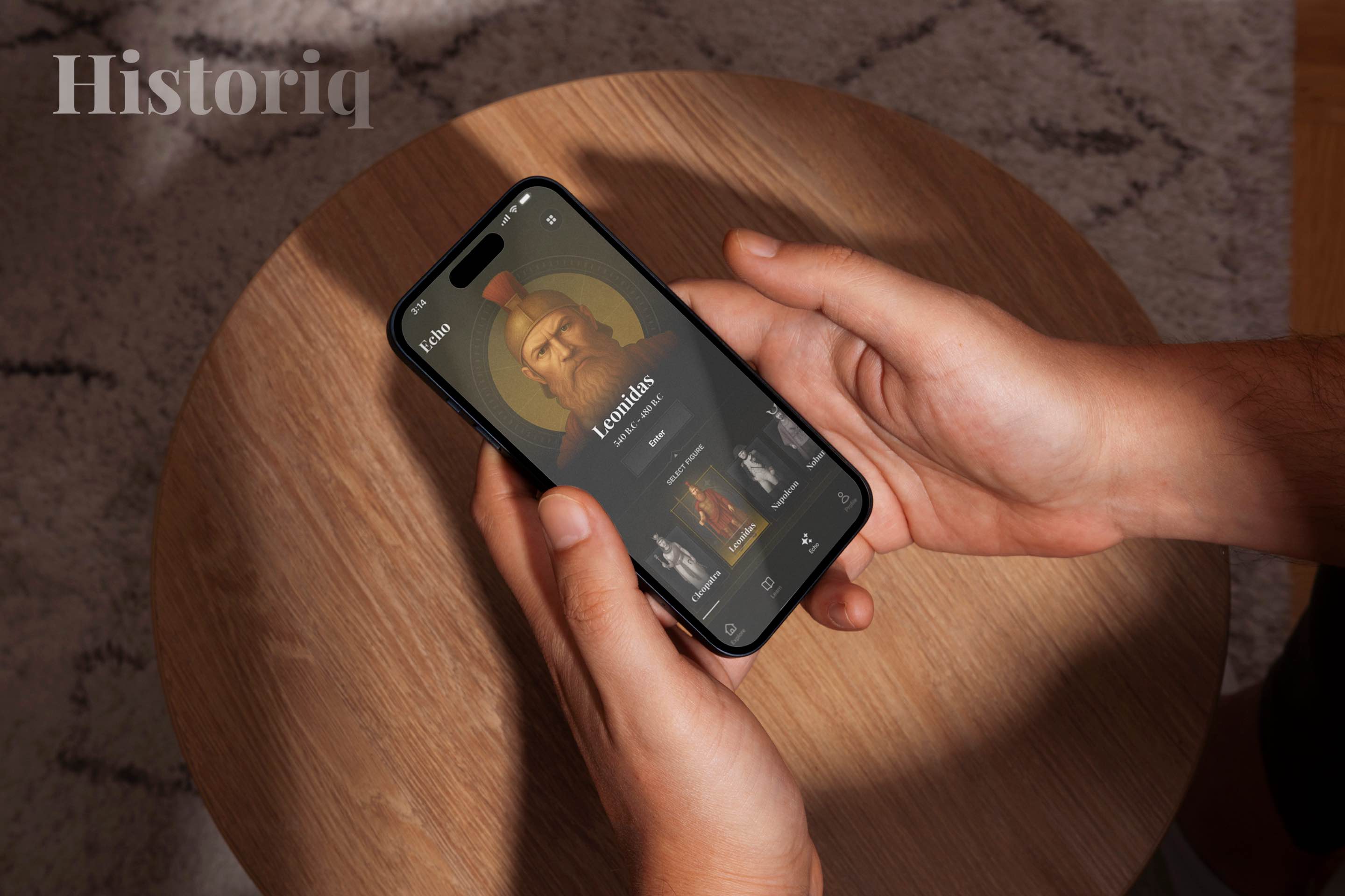
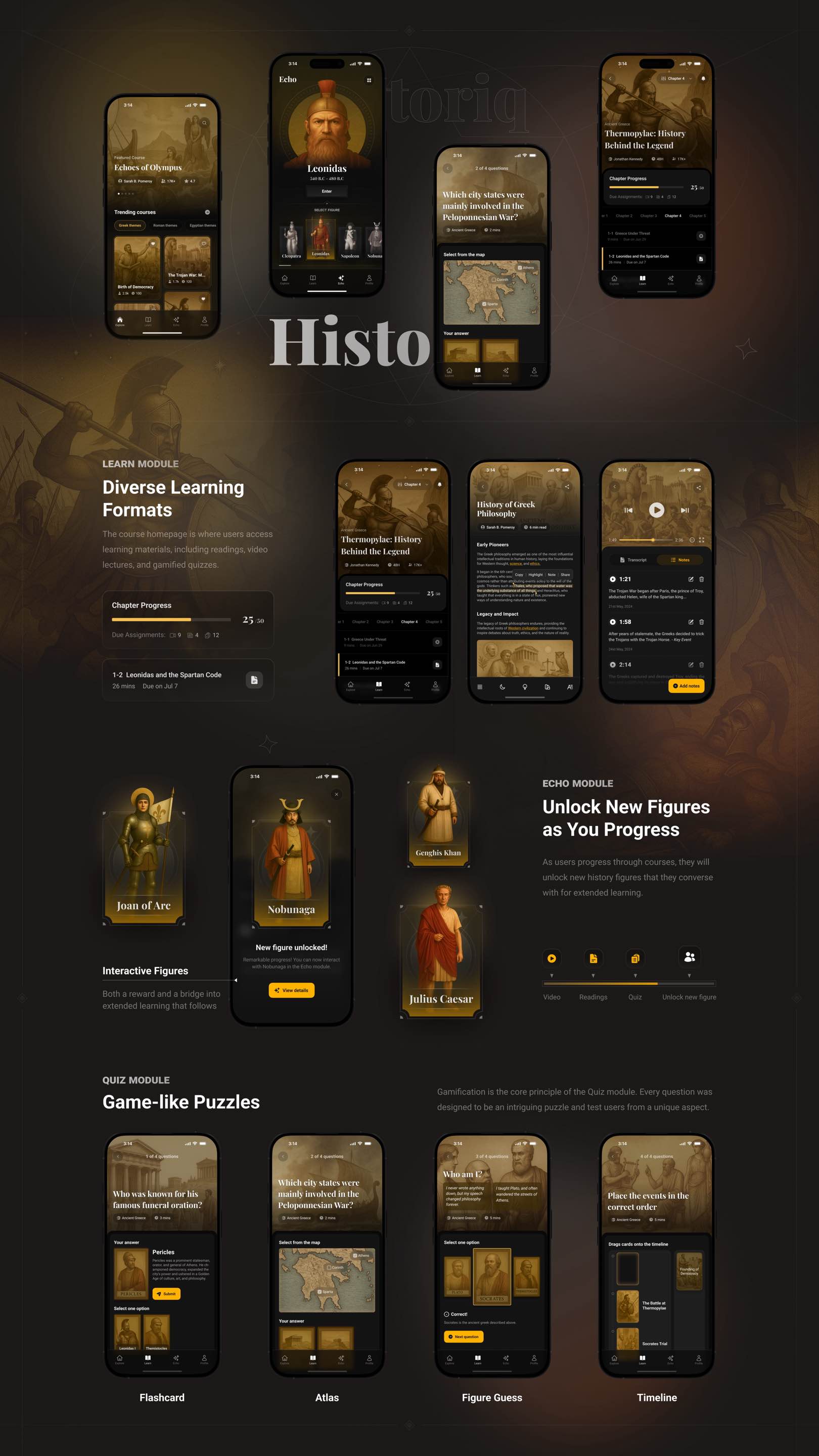
Jingyi Wang's work explores how design can transform complex information into meaningful, human-centered experiences. With a background in graphic design and a focus on user experience and learning experience design, she is particularly interested in how digital interfaces can support understanding, engagement, and emotional connection. Historiq reflects her interest in rethinking how people learn. Rather than treating history as a collection of isolated facts, she approaches it as a narrative system that can be experienced, explored, and interacted with. Through the integration of storytelling, gamification, and AI-driven interaction, she aims to create learning environments that encourage curiosity and sustained engagement. In this project, she focused on designing not just interfaces, but a learning journey—one that supports retention, guides users through complex content, and adapts to individual pacing. She is inspired by the potential of technology to make education more accessible and immersive, especially for younger audiences. Ultimately, her practice is driven by the belief that design can bridge the gap between information and understanding, transforming passive consumption into active learning and discovery.


About the Artist
Jingyi Wang
Jingyi Wang's work explores how design can transform complex information into meaningful, human-centered experiences. With a background in graphic design and a focus on user experience and learning experience design, she is particularly interested in how digital interfaces can support understanding, engagement, and emotional connection. Historiq reflects her interest in rethinking how people learn. Rather than treating history as a collection of isolated facts, she approaches it as a narrative system that can be experienced, explored, and interacted with. Through the integration of storytelling, gamification, and AI-driven interaction, she aims to create learning environments that encourage curiosity and sustained engagement. In this project, she focused on designing not just interfaces, but a learning journey—one that supports retention, guides users through complex content, and adapts to individual pacing. She is inspired by the potential of technology to make education more accessible and immersive, especially for younger audiences. Ultimately, her practice is driven by the belief that design can bridge the gap between information and understanding, transforming passive consumption into active learning and discovery.
About the Artist
Jingyi Wang
Jingyi Wang's work explores how design can transform complex information into meaningful, human-centered experiences. With a background in graphic design and a focus on user experience and learning experience design, she is particularly interested in how digital interfaces can support understanding, engagement, and emotional connection. Historiq reflects her interest in rethinking how people learn. Rather than treating history as a collection of isolated facts, she approaches it as a narrative system that can be experienced, explored, and interacted with. Through the integration of storytelling, gamification, and AI-driven interaction, she aims to create learning environments that encourage curiosity and sustained engagement. In this project, she focused on designing not just interfaces, but a learning journey—one that supports retention, guides users through complex content, and adapts to individual pacing. She is inspired by the potential of technology to make education more accessible and immersive, especially for younger audiences. Ultimately, her practice is driven by the belief that design can bridge the gap between information and understanding, transforming passive consumption into active learning and discovery.