About the Artist
Danyang Mu
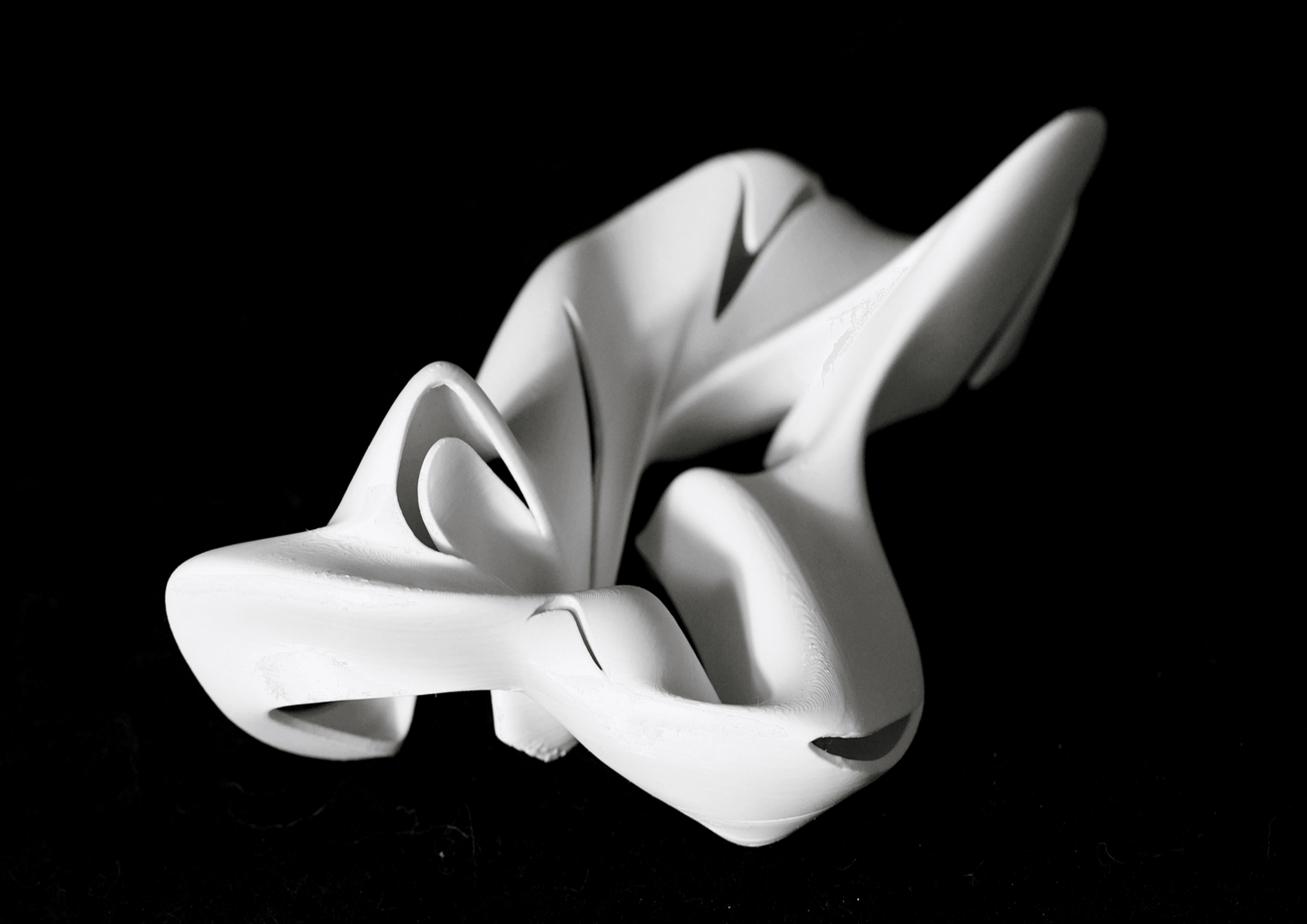
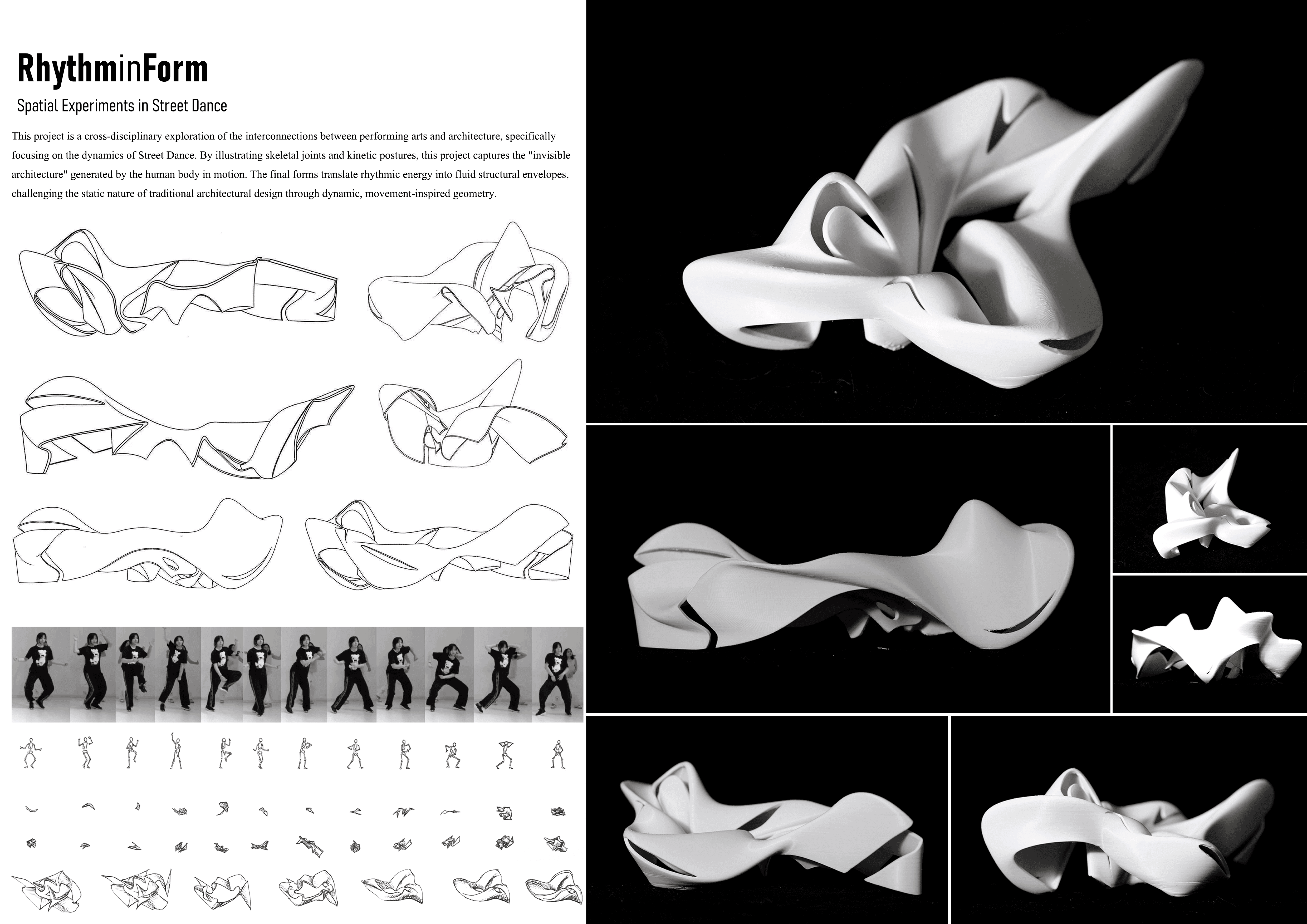
My practice explores the translation between the human body, space, and structure, with a particular focus on dance as a form of embodied urban expression. I am interested in the relationship between the dynamic and the static — how movement can be materialized into enduring form. This process is both an exploration of how motion can become architectural, and a reflection on how built environments can respond to embodied experience. Through this work, I seek to challenge static nature of traditional architectural design, by tailoring design to the physical movements of the human body and focusing on the human experience. Through engaging in street dance — an art form that is shaped by rhythm, improvisation, and the constant negotiation of bodies in motion — I aim to propose a more open, fluid, and generative spatial approach.

About the Artist
Danyang Mu
My practice explores the translation between the human body, space, and structure, with a particular focus on dance as a form of embodied urban expression. I am interested in the relationship between the dynamic and the static — how movement can be materialized into enduring form. This process is both an exploration of how motion can become architectural, and a reflection on how built environments can respond to embodied experience. Through this work, I seek to challenge static nature of traditional architectural design, by tailoring design to the physical movements of the human body and focusing on the human experience. Through engaging in street dance — an art form that is shaped by rhythm, improvisation, and the constant negotiation of bodies in motion — I aim to propose a more open, fluid, and generative spatial approach.
About the Artist
Danyang Mu
My practice explores the translation between the human body, space, and structure, with a particular focus on dance as a form of embodied urban expression. I am interested in the relationship between the dynamic and the static — how movement can be materialized into enduring form. This process is both an exploration of how motion can become architectural, and a reflection on how built environments can respond to embodied experience. Through this work, I seek to challenge static nature of traditional architectural design, by tailoring design to the physical movements of the human body and focusing on the human experience. Through engaging in street dance — an art form that is shaped by rhythm, improvisation, and the constant negotiation of bodies in motion — I aim to propose a more open, fluid, and generative spatial approach.