About the Artist
Daiwei Wu
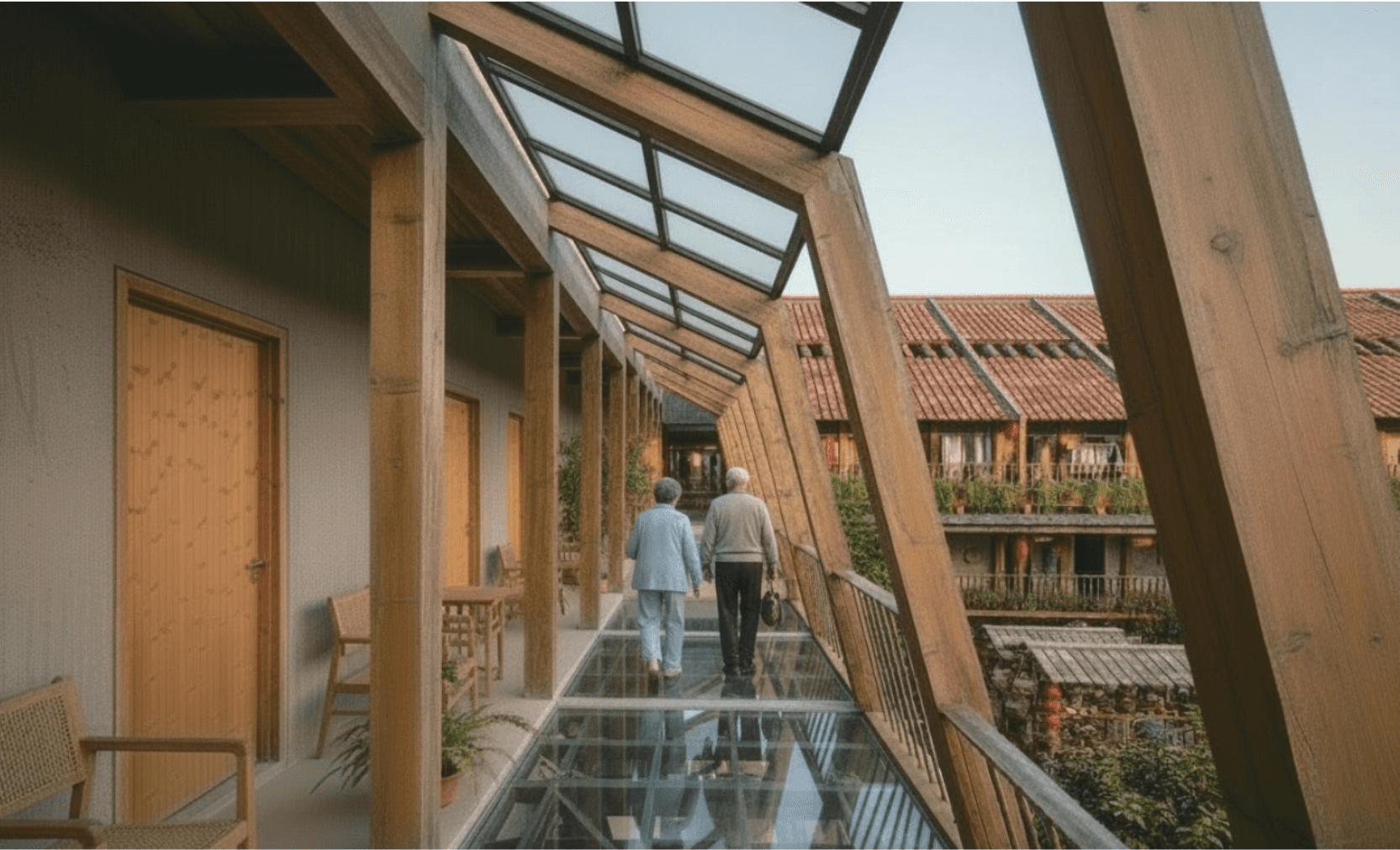
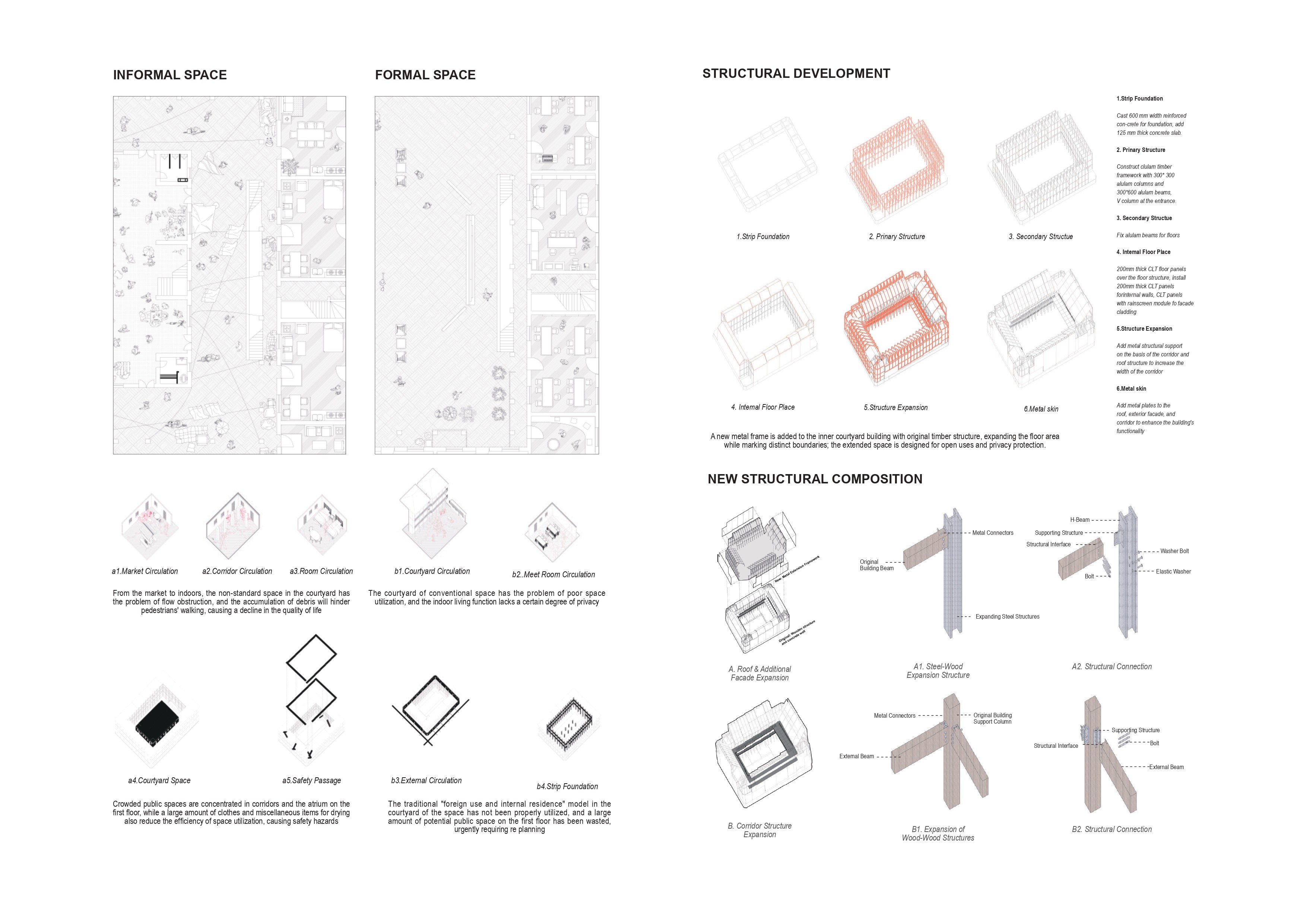
I am an undergraduate architecture student at the Shanghai Academy of Fine Arts, Shanghai University. My work is centered on urban renewal, community-oriented design, and the social dimension of architecture. I understand architecture not simply as formal production, but as a spatial practice shaped by everyday life, collective memory, and existing social relations. This position has been informed by research and design projects on lilong renewal, rural resilience, and high-density residential environments. A recurring concern in my work is the relationship between architectural intervention and lived reality. Historic neighborhoods have shown me that residents are not passive recipients of renewal, but the most direct users of space and the clearest interpreters of its problems, potentials, and limits. Their daily habits, spatial experience, and practical judgment provide an essential basis for meaningful design decisions. For this reason, renewal should not remain a one-way professional proposal; it requires careful observation, spatial analysis, and sustained dialogue with local users. I hope to further develop an architectural methodology that combines analytical rigor with social responsiveness, and that contributes to more dignified and sustainable living environments under conditions of spatial constraint.

About the Artist
Daiwei Wu
I am an undergraduate architecture student at the Shanghai Academy of Fine Arts, Shanghai University. My work is centered on urban renewal, community-oriented design, and the social dimension of architecture. I understand architecture not simply as formal production, but as a spatial practice shaped by everyday life, collective memory, and existing social relations. This position has been informed by research and design projects on lilong renewal, rural resilience, and high-density residential environments. A recurring concern in my work is the relationship between architectural intervention and lived reality. Historic neighborhoods have shown me that residents are not passive recipients of renewal, but the most direct users of space and the clearest interpreters of its problems, potentials, and limits. Their daily habits, spatial experience, and practical judgment provide an essential basis for meaningful design decisions. For this reason, renewal should not remain a one-way professional proposal; it requires careful observation, spatial analysis, and sustained dialogue with local users. I hope to further develop an architectural methodology that combines analytical rigor with social responsiveness, and that contributes to more dignified and sustainable living environments under conditions of spatial constraint.
About the Artist
Daiwei Wu
I am an undergraduate architecture student at the Shanghai Academy of Fine Arts, Shanghai University. My work is centered on urban renewal, community-oriented design, and the social dimension of architecture. I understand architecture not simply as formal production, but as a spatial practice shaped by everyday life, collective memory, and existing social relations. This position has been informed by research and design projects on lilong renewal, rural resilience, and high-density residential environments. A recurring concern in my work is the relationship between architectural intervention and lived reality. Historic neighborhoods have shown me that residents are not passive recipients of renewal, but the most direct users of space and the clearest interpreters of its problems, potentials, and limits. Their daily habits, spatial experience, and practical judgment provide an essential basis for meaningful design decisions. For this reason, renewal should not remain a one-way professional proposal; it requires careful observation, spatial analysis, and sustained dialogue with local users. I hope to further develop an architectural methodology that combines analytical rigor with social responsiveness, and that contributes to more dignified and sustainable living environments under conditions of spatial constraint.