Yujia Ke

Familiar Strange: A Speculative Interface for Tasting the Unfamiliar

September 2025

Medium:

UI/UX Design

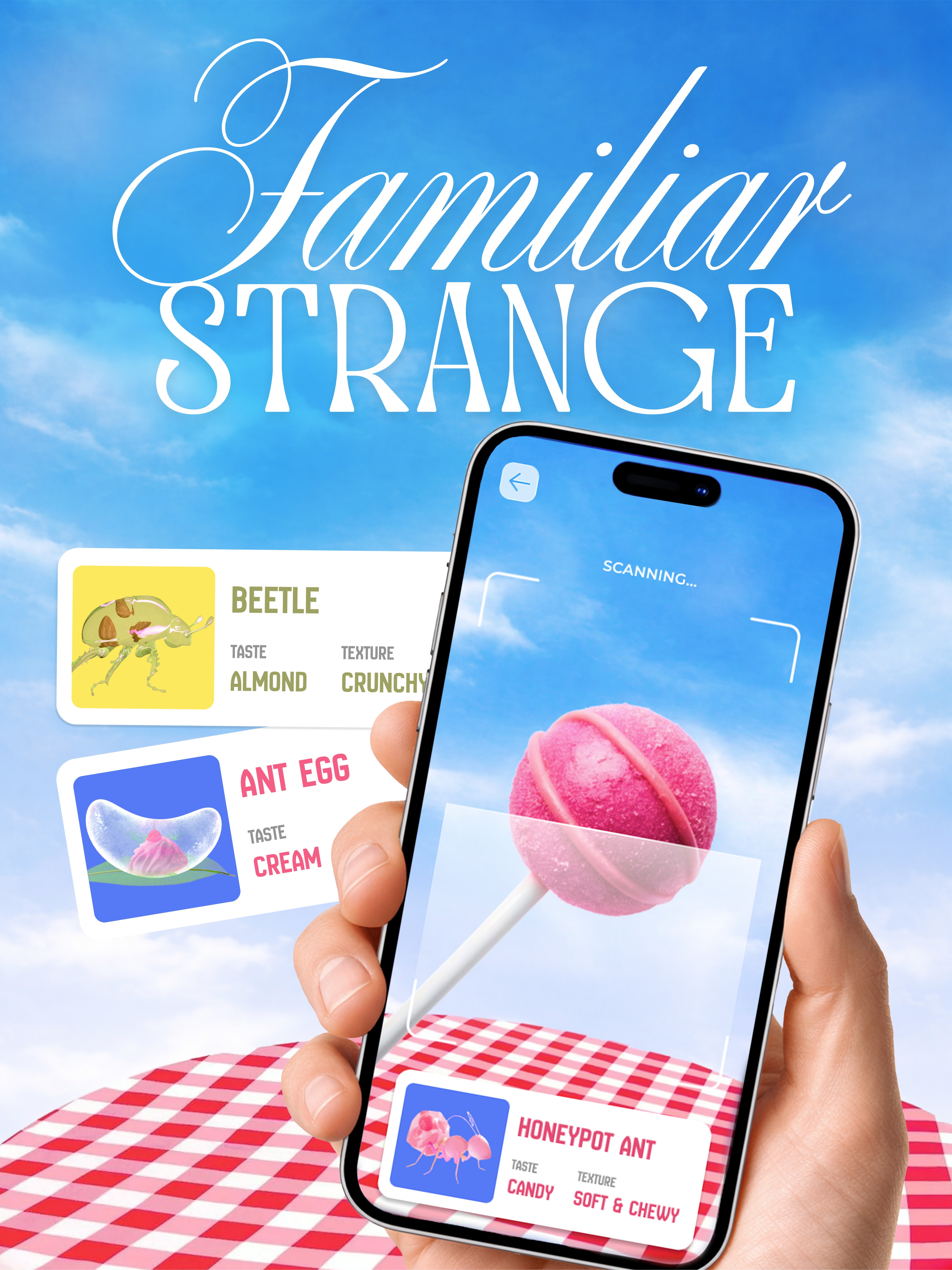
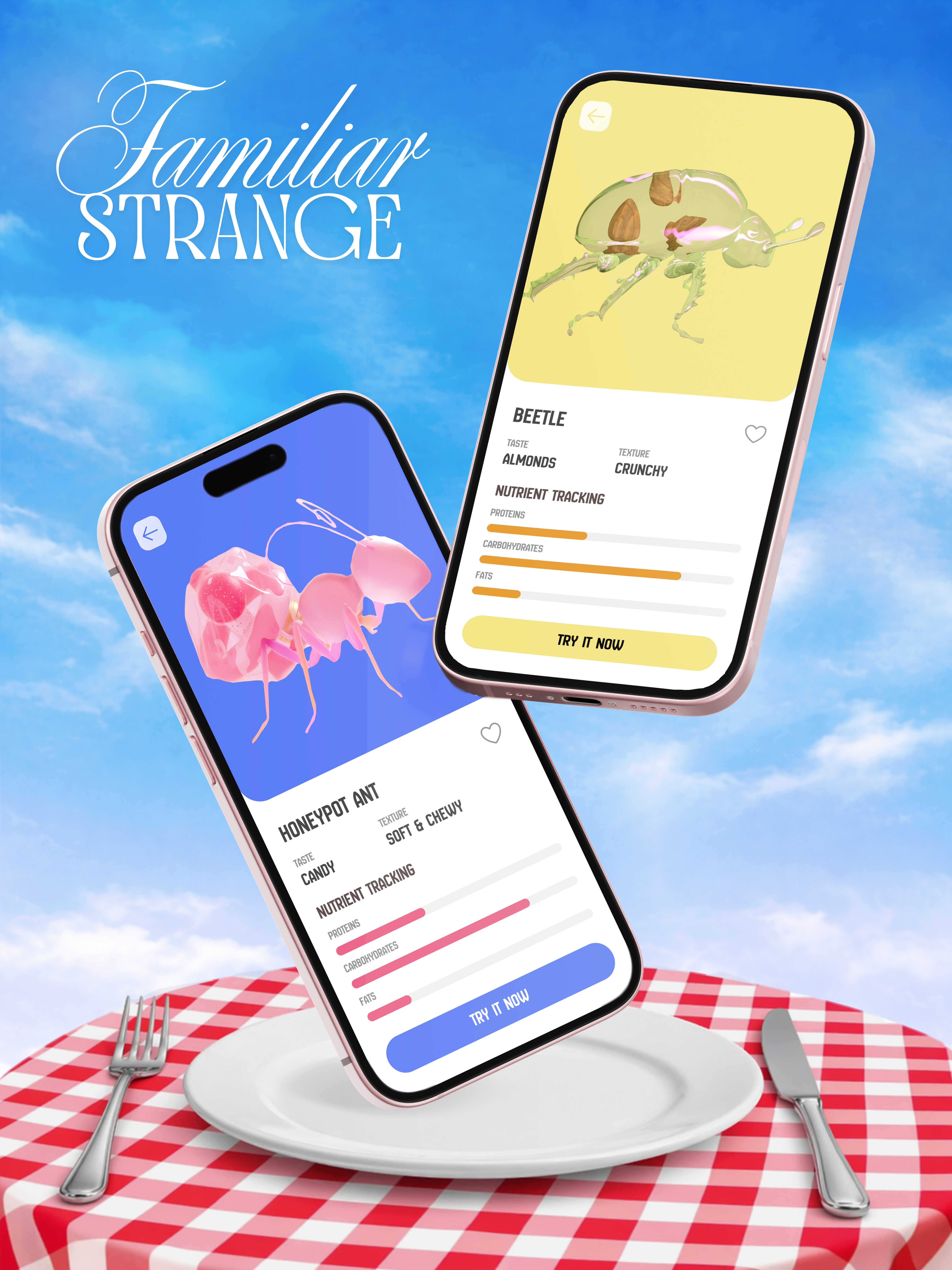
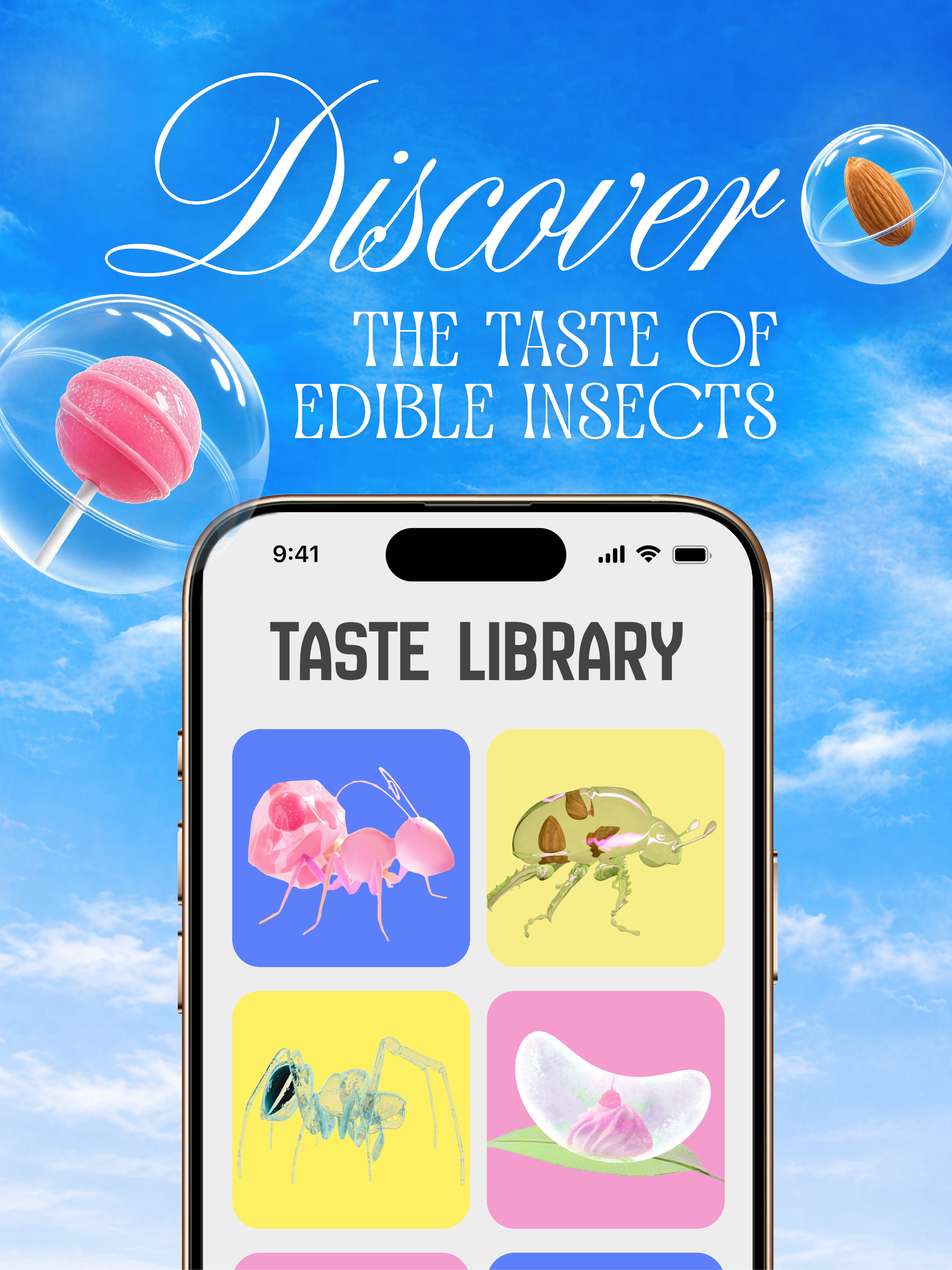
What separates the unfamiliar from the unacceptable—and can design close that distance? Despite proven nutritional value and low environmental impact, insects remain culturally rejected across much of the world. This resistance is not rational; it is perceptual. Taste is not the final barrier—recognition is. Familiar Strange is a speculative interface that navigates this gap through familiarity rather than confrontation. By scanning everyday foods, users discover insect-based counterparts that share similar flavor profiles, reframing the unknown through what is already known. A visualized insect flavor library maps taste as a bridge across cultures and comfort zones, while a location-based layer extends the experience into urban space—guiding users toward real-world encounters through mobile food units embedded in the city. This is not a sustainability argument. It is a perceptual one. Rather than framing insects as obligation, Familiar Strange proposes that acceptance begins where curiosity does—not through persuasion, but through experience. In this reimagined food system, taste becomes more than sensory input. It becomes a design medium for shifting behavior.

About the Artist

Yujia Ke

Yujia Ke is a UI/UX designer and artist based in the San Francisco Bay Area, working at the intersection of interaction design, cultural perception, and speculative futures. Her practice treats design not as a problem-solving instrument, but as a medium for interrogating the assumptions embedded in everyday systems—and reimagining what those systems could become. Her work translates complex, often invisible forces into experiential interfaces: tactile, narrative-driven, and grounded in human behavior. Across projects, she asks how design shapes not just what people do, but what they are willing to imagine. In Familiar Strange, Yujia turns to taste as both subject and method—using flavor as an entry point into larger questions of cultural acceptance, ecological urgency, and behavioral change. The project reflects a broader conviction in her practice: that the most resistant thresholds are rarely technical. They are perceptual. And perception, like design, can be deliberately shifted.
Yujia Ke

Familiar Strange: A Speculative Interface for Tasting the Unfamiliar

September 2025

Medium:

UI/UX Design

What separates the unfamiliar from the unacceptable—and can design close that distance? Despite proven nutritional value and low environmental impact, insects remain culturally rejected across much of the world. This resistance is not rational; it is perceptual. Taste is not the final barrier—recognition is. Familiar Strange is a speculative interface that navigates this gap through familiarity rather than confrontation. By scanning everyday foods, users discover insect-based counterparts that share similar flavor profiles, reframing the unknown through what is already known. A visualized insect flavor library maps taste as a bridge across cultures and comfort zones, while a location-based layer extends the experience into urban space—guiding users toward real-world encounters through mobile food units embedded in the city. This is not a sustainability argument. It is a perceptual one. Rather than framing insects as obligation, Familiar Strange proposes that acceptance begins where curiosity does—not through persuasion, but through experience. In this reimagined food system, taste becomes more than sensory input. It becomes a design medium for shifting behavior.

About the Artist

Yujia Ke

Yujia Ke is a UI/UX designer and artist based in the San Francisco Bay Area, working at the intersection of interaction design, cultural perception, and speculative futures. Her practice treats design not as a problem-solving instrument, but as a medium for interrogating the assumptions embedded in everyday systems—and reimagining what those systems could become. Her work translates complex, often invisible forces into experiential interfaces: tactile, narrative-driven, and grounded in human behavior. Across projects, she asks how design shapes not just what people do, but what they are willing to imagine. In Familiar Strange, Yujia turns to taste as both subject and method—using flavor as an entry point into larger questions of cultural acceptance, ecological urgency, and behavioral change. The project reflects a broader conviction in her practice: that the most resistant thresholds are rarely technical. They are perceptual. And perception, like design, can be deliberately shifted.
Yujia Ke

Familiar Strange: A Speculative Interface for Tasting the Unfamiliar

September 2025

Medium:

UI/UX Design

What separates the unfamiliar from the unacceptable—and can design close that distance? Despite proven nutritional value and low environmental impact, insects remain culturally rejected across much of the world. This resistance is not rational; it is perceptual. Taste is not the final barrier—recognition is. Familiar Strange is a speculative interface that navigates this gap through familiarity rather than confrontation. By scanning everyday foods, users discover insect-based counterparts that share similar flavor profiles, reframing the unknown through what is already known. A visualized insect flavor library maps taste as a bridge across cultures and comfort zones, while a location-based layer extends the experience into urban space—guiding users toward real-world encounters through mobile food units embedded in the city. This is not a sustainability argument. It is a perceptual one. Rather than framing insects as obligation, Familiar Strange proposes that acceptance begins where curiosity does—not through persuasion, but through experience. In this reimagined food system, taste becomes more than sensory input. It becomes a design medium for shifting behavior.

About the Artist

Yujia Ke

Yujia Ke is a UI/UX designer and artist based in the San Francisco Bay Area, working at the intersection of interaction design, cultural perception, and speculative futures. Her practice treats design not as a problem-solving instrument, but as a medium for interrogating the assumptions embedded in everyday systems—and reimagining what those systems could become. Her work translates complex, often invisible forces into experiential interfaces: tactile, narrative-driven, and grounded in human behavior. Across projects, she asks how design shapes not just what people do, but what they are willing to imagine. In Familiar Strange, Yujia turns to taste as both subject and method—using flavor as an entry point into larger questions of cultural acceptance, ecological urgency, and behavioral change. The project reflects a broader conviction in her practice: that the most resistant thresholds are rarely technical. They are perceptual. And perception, like design, can be deliberately shifted.