About the Artist
Jiayi Wang
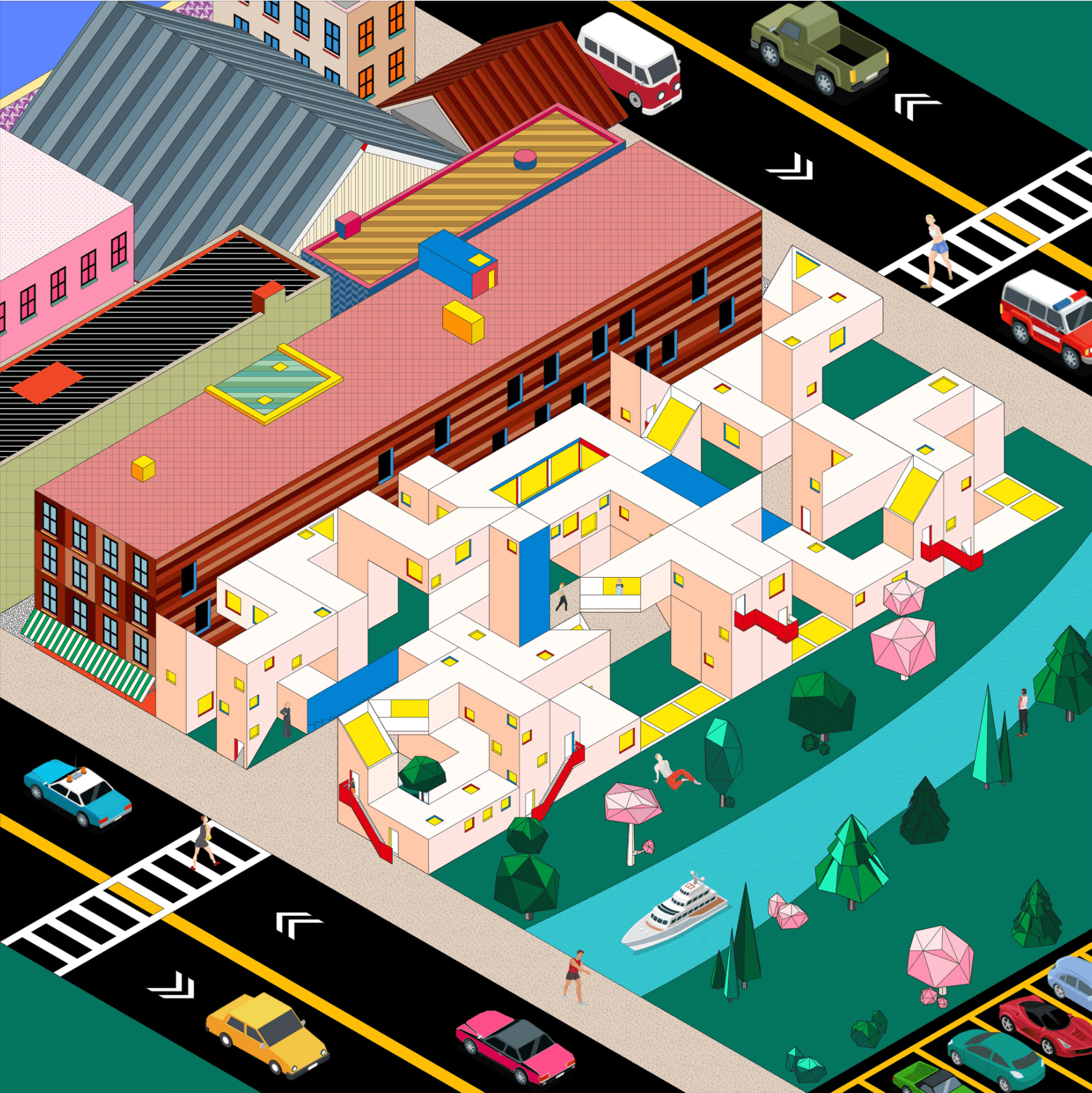
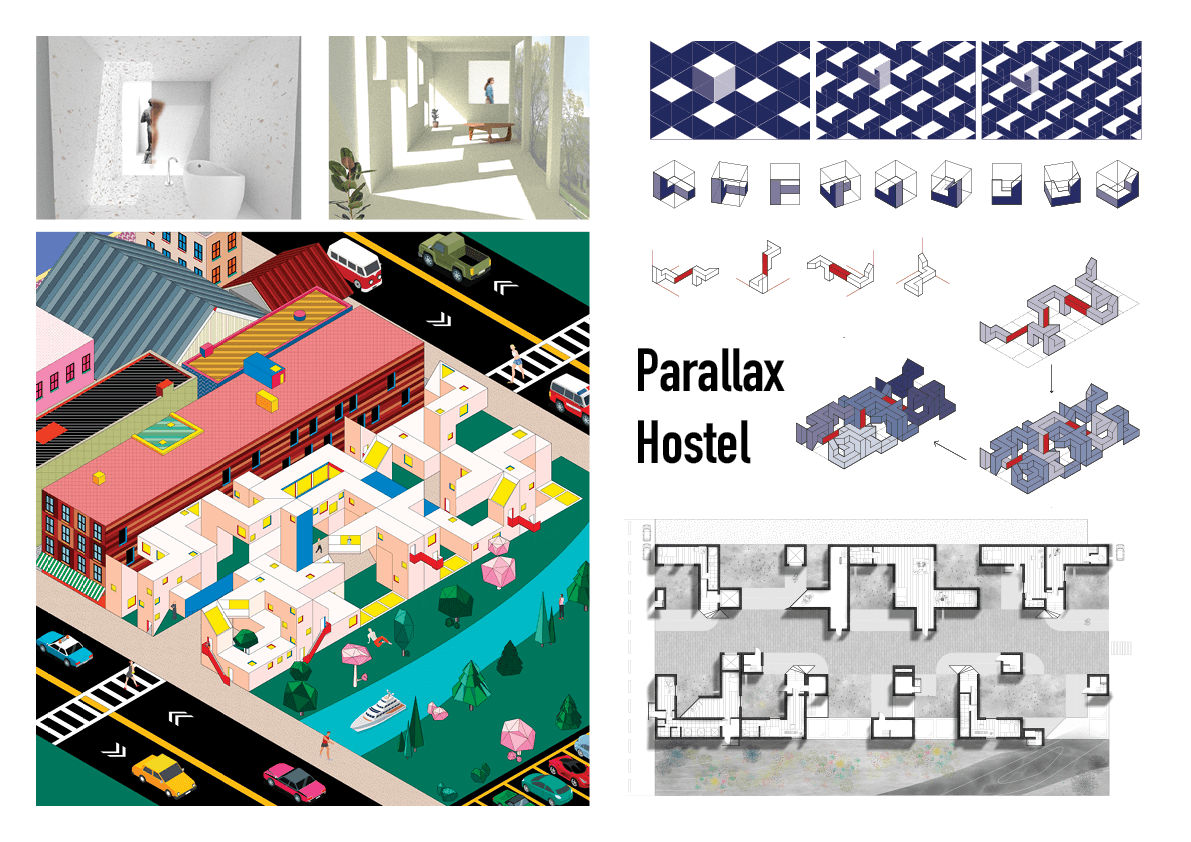
This project explores the translation of visual perception into spatial experience. Drawing from Escher’s impossible geometries, I was interested in how ambiguity, contradiction, and illusion can become architectural generators rather than graphic effects. Instead of resolving the illusion, the design embraces instability—spaces appear to shift, overlap, and reorient depending on movement and viewpoint. The modular units operate as both independent dwellings and fragments of a larger system, while bridges and stairs construct a layered circulation network that reinforces this perceptual complexity. Through this project, architecture becomes less about fixed form and more about how space is continuously reinterpreted through the body in motion.

About the Artist
Jiayi Wang
This project explores the translation of visual perception into spatial experience. Drawing from Escher’s impossible geometries, I was interested in how ambiguity, contradiction, and illusion can become architectural generators rather than graphic effects. Instead of resolving the illusion, the design embraces instability—spaces appear to shift, overlap, and reorient depending on movement and viewpoint. The modular units operate as both independent dwellings and fragments of a larger system, while bridges and stairs construct a layered circulation network that reinforces this perceptual complexity. Through this project, architecture becomes less about fixed form and more about how space is continuously reinterpreted through the body in motion.
About the Artist
Jiayi Wang
This project explores the translation of visual perception into spatial experience. Drawing from Escher’s impossible geometries, I was interested in how ambiguity, contradiction, and illusion can become architectural generators rather than graphic effects. Instead of resolving the illusion, the design embraces instability—spaces appear to shift, overlap, and reorient depending on movement and viewpoint. The modular units operate as both independent dwellings and fragments of a larger system, while bridges and stairs construct a layered circulation network that reinforces this perceptual complexity. Through this project, architecture becomes less about fixed form and more about how space is continuously reinterpreted through the body in motion.